1. Read your work out loud
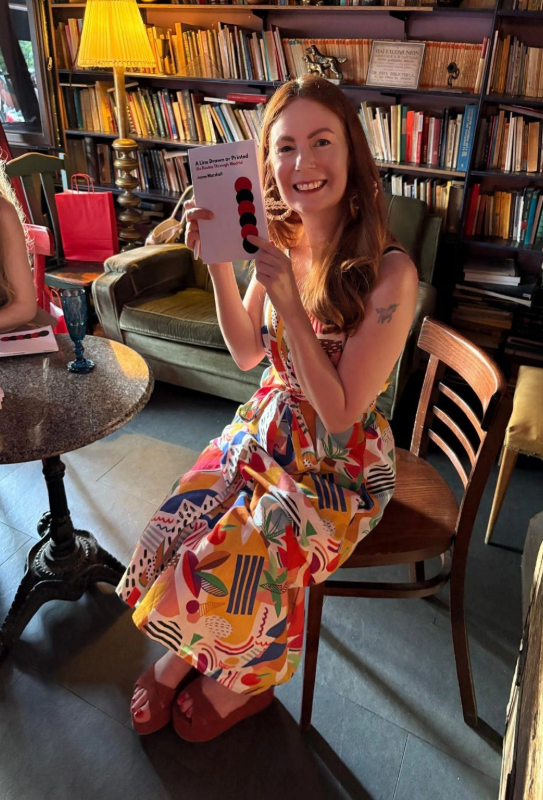
Let’s start with the basics – the building blocks of good, smooth writing: read your work out loud.

Read it out loud, then get Word to read it to you in its robot voice, then print it and read it out loud one more time.
But, Jayne – I’ve already read my work 8136.5 times, I hear you say. I get it, but the trick here is to get out of your own head – the head of the author – and into the head of the reader. By the time you have done these three read throughs you’ll be seeing your work as a reader and not a writer.
Believe me, it’s invaluable.
2. Read through your work paragraph by paragraph and ask: what is this paragraph doing?
For the second tip, I hope you kept hold of that print out. Now, go grab some highlighters, too.
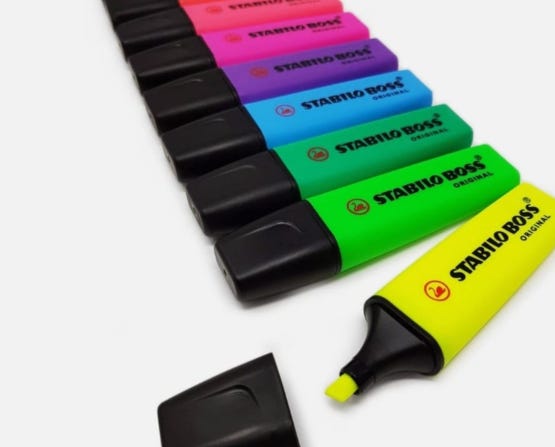
Read through your work paragraph by paragraph and ask: what is this paragraph doing? Decide if it is adding to the “action”, the forward motion of the piece, or the “emotion”, your themes and broader messages. Assign a highlighter colour for each (action and emotion) and go through annotating every paragraph.
Once that is done go back over your highlighter notes moving or removing paragraphs and calibrating the flow and the deeper messages where necessary. This will make the work tight and will keep your reader invested.
3. Too many feeling and thinking words can make our work sound passive and a little diluted
How are you feeling? What are you thinking about? Wait, don’t tell me yet! Obviously, we all think and feel, but that doesn’t mean we can’t tweak those real human experiences and emotions to render them more vividly in our writing.
Too many ‘think’, ‘feel’, ‘remember’ (my weak spot), ‘believe’, ‘wonder’ or ‘love’ can make our work sound passive and a little diluted. Like weak Ribena.
The benefit of weeding these words out is not only to combat insipidity, but it also forces us to examine our word choices on a line-level and reach for more interesting descriptions.
Or you could go the other way – have a look at the Lorrie Moore quote below.
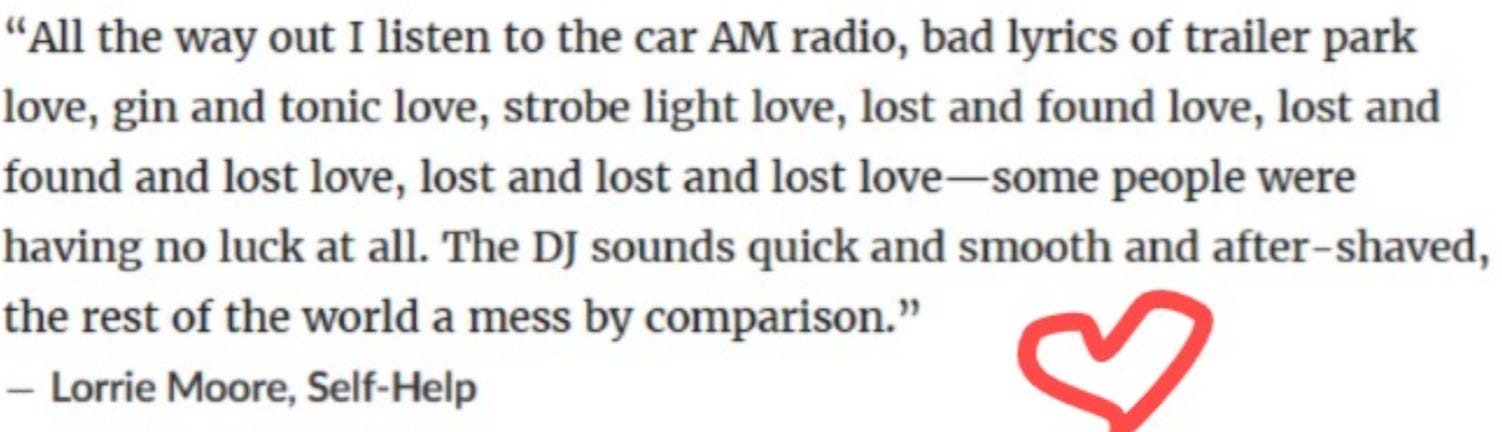
She uses ‘love’ seven times, with a series of changing qualifiers, calling out its ubiquity to the human experience through repetition and by transforming it into a catalogue of cultural clichés. In this way she contextualises the experience of love, versus simply describing it, finally ending with the polished radio voice which contrasts with the messy reality (ours) outside the car.
4. Only take the editing advice that resonates with you
This editing tip is more of a reminder: only take the editing advice that resonates with you. As you might imagine, I love editing, but you can certainly edit something to death – get to ‘the point of diminishing returns’, as my sister calls it.
I’ve found that writers generally fall into two camps when it comes to editing – basically a love it or hate it kind of situation. As I said, I love it, both for my own writing and in my work as a professional editor, but I have had to learn to trust my own instincts when knowing what to leave alone and what to keep tinkering with. I call it being ‘firm but faithful’. Firm with yourself when knowing where to make changes – big or small – but also faithful to yourself and your voice.
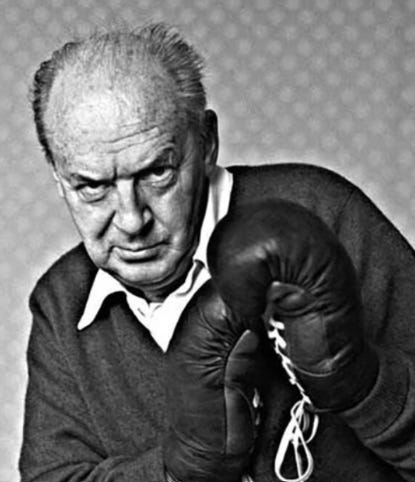
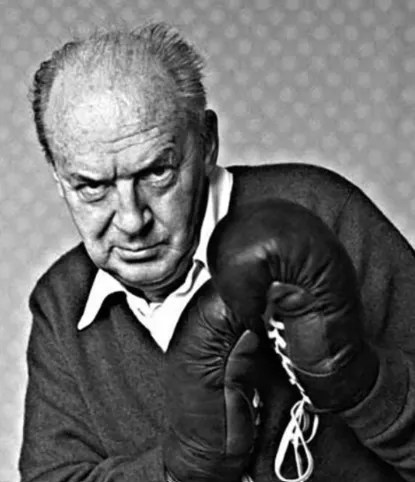
However, if you are in the ‘hate it’ camp, let me share one of my favourite quotes – from Vladimir Nabokov in his Lectures on Literature – to inspire you to embrace the spirit of editing embodied in his idea of ‘recapture’:
The Russian language supplies definitions for two types of inspiration, which can be paraphrased as “rapture” and “recapture”. The difference between them is mainly of a climatic kind, the first being hot and brief and the second cool and sustained. When the time is ripe and the writer settles down to their work, they will rely on the second serene and steady kind of inspiration, the trusted mate who helps to recapture and reconstruct the world.
5. The title is the first line
The title is the first line.
That’s something I was taught whilst studying a creative writing master’s – it was during a poetry class and even though I don’t (can’t!) write poetry, it has stayed with me across all the genres I’ve written and edited in.
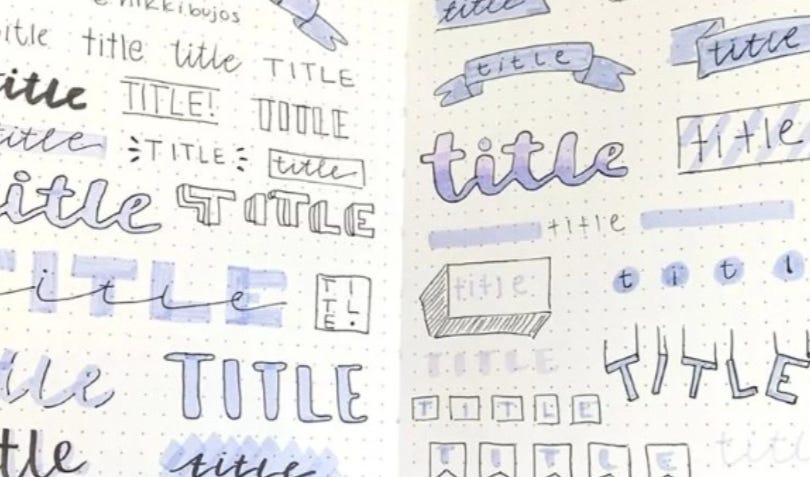
Every word should earn its place, so put some time and thought into your title. It is also the first thing a reader reads, so what do you want it to say to them? What do you want the title to transmit about the piece they are about to read?
When I’m coming up with a title for a new piece of writing, I often think of it as an epigraph, working as an elegant thesis statement for the piece.
6. It’s all about the clock and the gun
This editing tip is a two-parter and it comes from Chuck Palahniuk by way of Chekhov, Billy Bragg and Motown. No, your eyes do not deceive you.
It’s all about the clock and the gun.
⏱️ Part 1: The Clock ⏱️
To paraphrase Palahniuk, the clock is anything that limits a story’s length by forcing it to end at designated time. In Titanic, it’s the ship’s journey, in many books and films, it’s a pregnancy. But it isn’t always a countdown, it can also be a way to mark changes. Scarlett O’Hara’s waistline, for example, or the assembly of a dinosaur skeleton in Bringing Up Baby.
Such limits are helpful to corral the story. As Billy Bragg said about song writing, by way of Motown’s Berry Gordy, if you can’t say it in three minutes it’s probably not worth saying.

Chekhov’s gun is a different matter. But for now, if your story is ambling along with no clear destination, ask: where’s the clock?
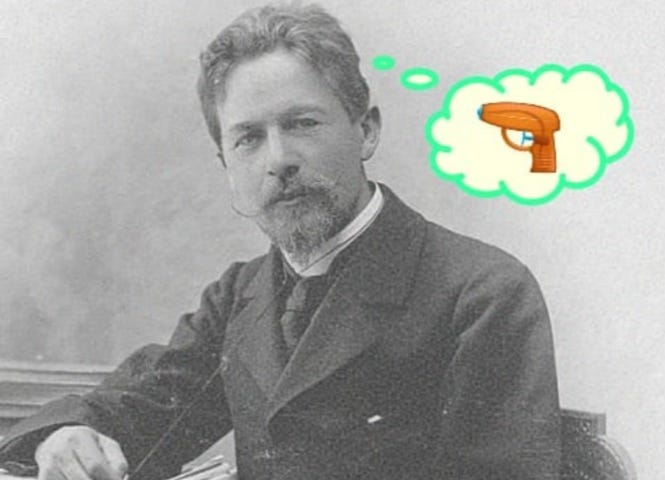
The idea of the gun comes from Chekhov’s directive that if a gun is put in drawer in chapter 1, by the final act it must have been pulled out (and likely on) someone.
You introduce a gun early in the narrative then quickly hide it so when you finally reveal it it will feel both surprising and inevitable to your reader.
A classic example is The Shining (the novel, not the film). We are told early on that the old boiler in the hotel is unstable and requires venting every day or it will explode. Throughout the story, the boiler acts as a clock, marking Jack’s escalating madness and building pressure. Jack becomes consumed by the hotel’s ghosts and forgets to vent the boiler. Finally, the pressure reaches its limit and the boiler explodes, destroying the hotel and killing Jack.
So if your story is pootling along in danger of fizzling out, ask yourself: Where’s the clock and where’s the gun?
7. Is there a third possibility?
This editing tip is between a writing tip and an editing tip. But I was very struck by it and wanted to share it.
In Ben Lerner’s new novel Transcription, he told me that in art there is always another possibility, beyond two binaries:
“…it’s unclear if [it] is part of the play or a mistake.”
“Or part of the play and a mistake. This is the third option that becomes possible in art.”
He describes how this has worked for him “in action”. See the quote below (part is cut off, but the passage starts: “I kept seeing the…”)
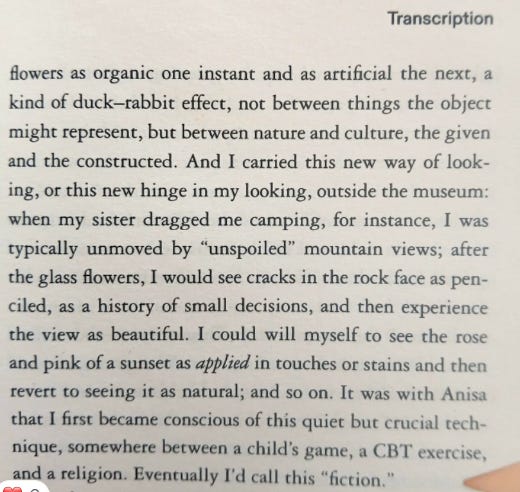
Look over a piece of your writing and ask yourself: is there another way to express this? Is there a third possibility that could elevate the writing and make it even more affecting and moving for the reader?
This could mean on a line-level – examine your word choices and see if there isn’t another way to say what you are saying. Or on a structural level – is there a more interesting way you could arrange your plot or the scaffolding of your writing?
8. The important word is after
The important word is after.
For this tip, I’m mostly leaving you in the capable hands of Margaret Atwood.
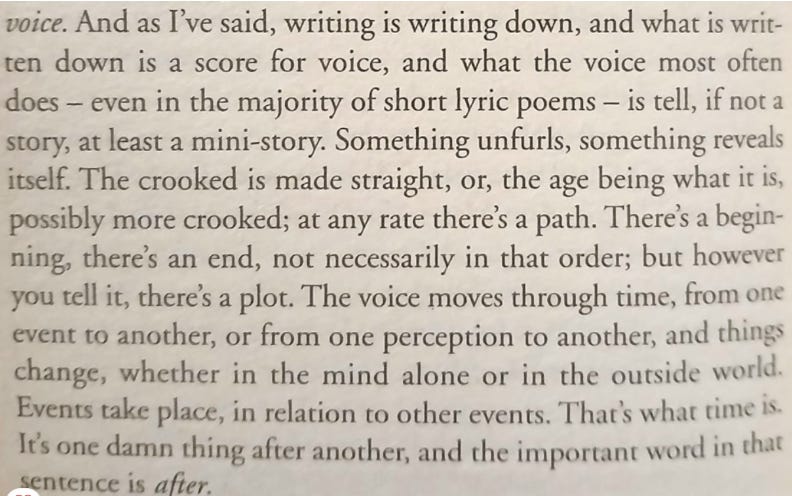
As per the quote above, does what you are writing have the following: an unfurling, a reveal, something made straight or more crooked, a path, an end and a beginning, movement, events taking place, shifting perception and, above all, change?
And if that was a bit overwhelming (cool your jets, Jayne!), you can read an essay I wrote for my website, which gives you guidance on how to manoeuvre all those pieces into place. Albeit, less poetically put than by our Marg.
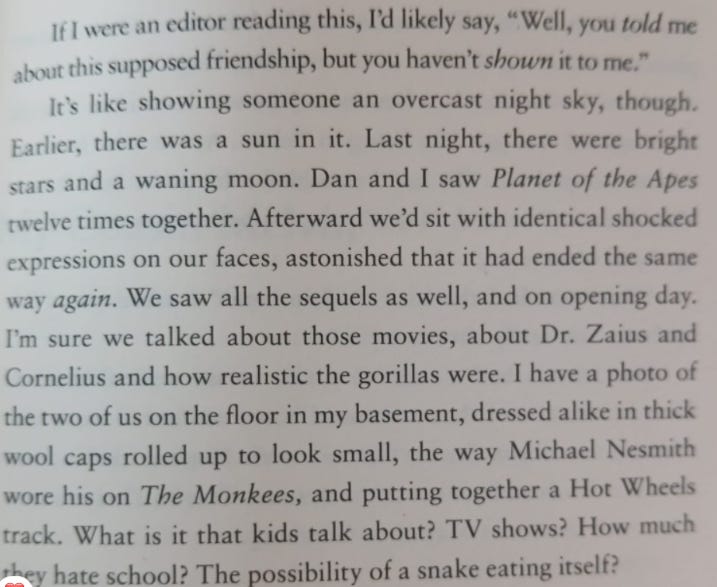
9. Show not tell
David Sedaris on “show not tell”. And a masterclass in saying he isn’t doing it, then going on to do it!
10. The power of punctuation
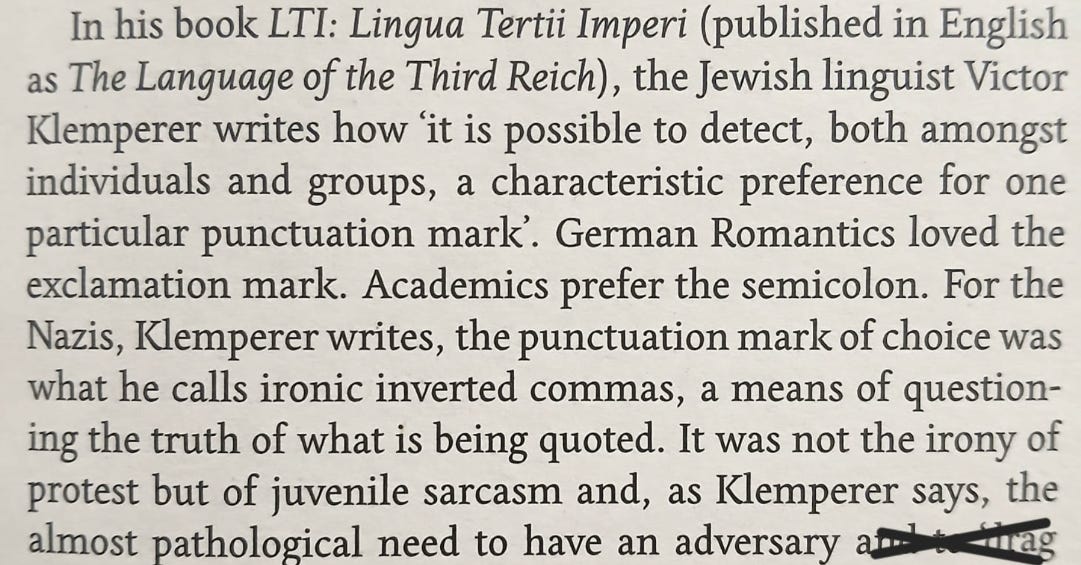
And finally, don’t forget the power of the lowly punctuation mark in your writing and editing! Keeping an eye on punctuation doesn’t only make your work read more smoothly and avoids any errors in meaning, it can also take on a whole conceptual power of its own.
And, if you don’t believe me, take it from the Nazis: